
Compare two charts with synastry, composite and Davison
Put two people's charts side by side, read the cross-aspects and synastry score, and cast the composite and Davison charts.
4 min · 5 steps
- 1
Set up the two people
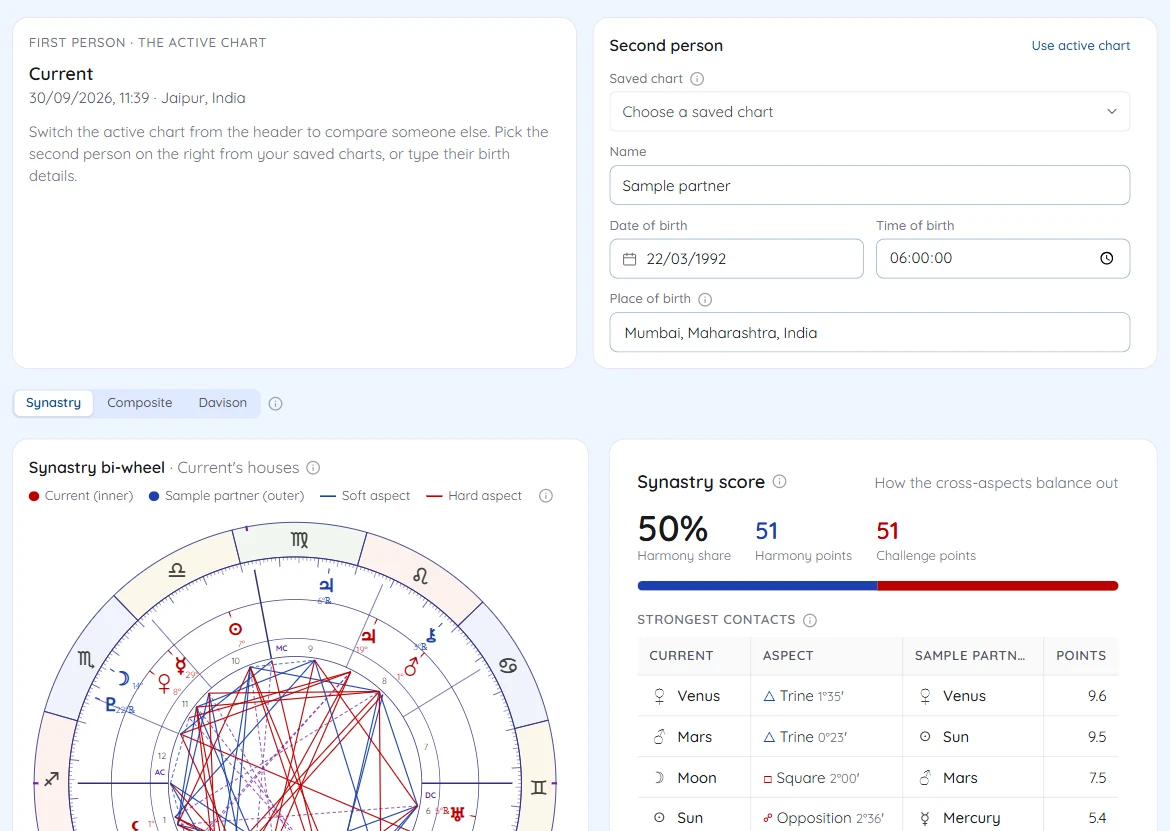
Go to Western → Synastry & Composite. The first person is the chart in the header. For the second, choose one from Saved chart, or type their Name, Date of birth, Time of birth and Place of birth. Use active chart copies the header's chart.
The second person is remembered in this browser, so you can move between Western screens and come back to the same pair.
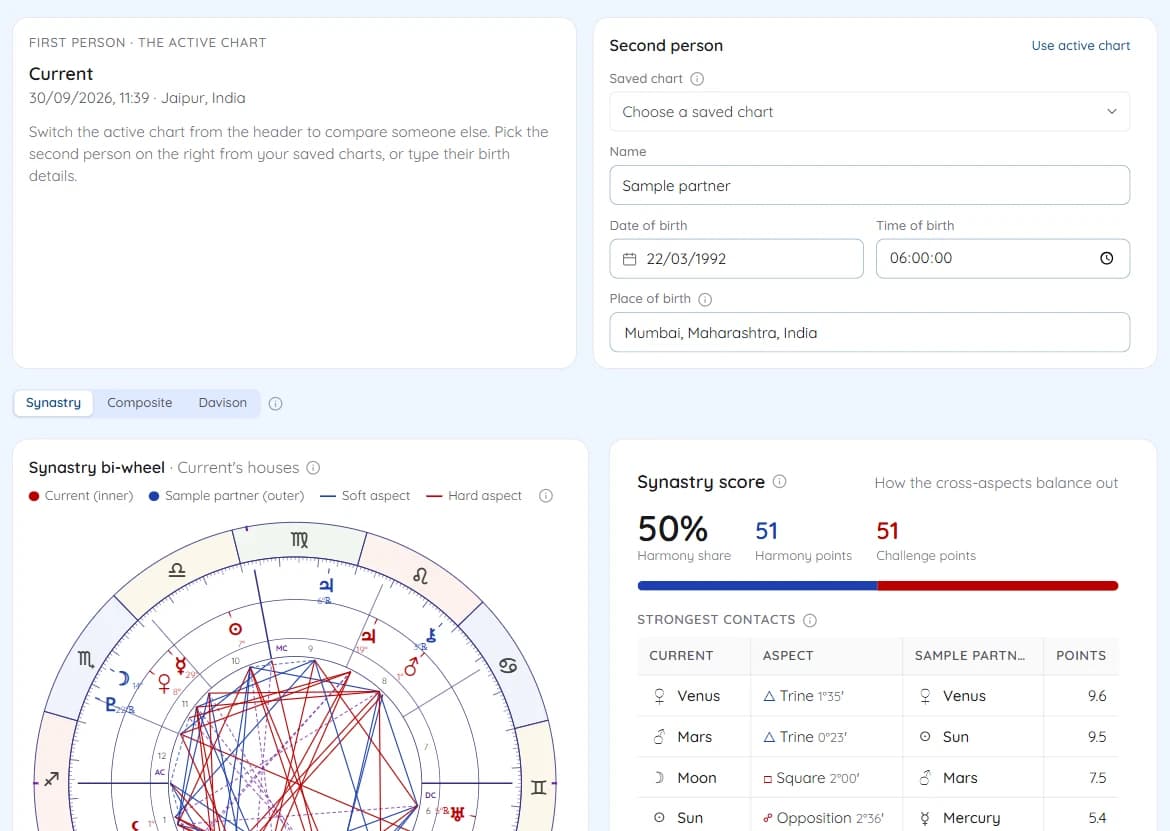
The first and second person above the Synastry, Composite and Davison tabs - 2
Read the synastry
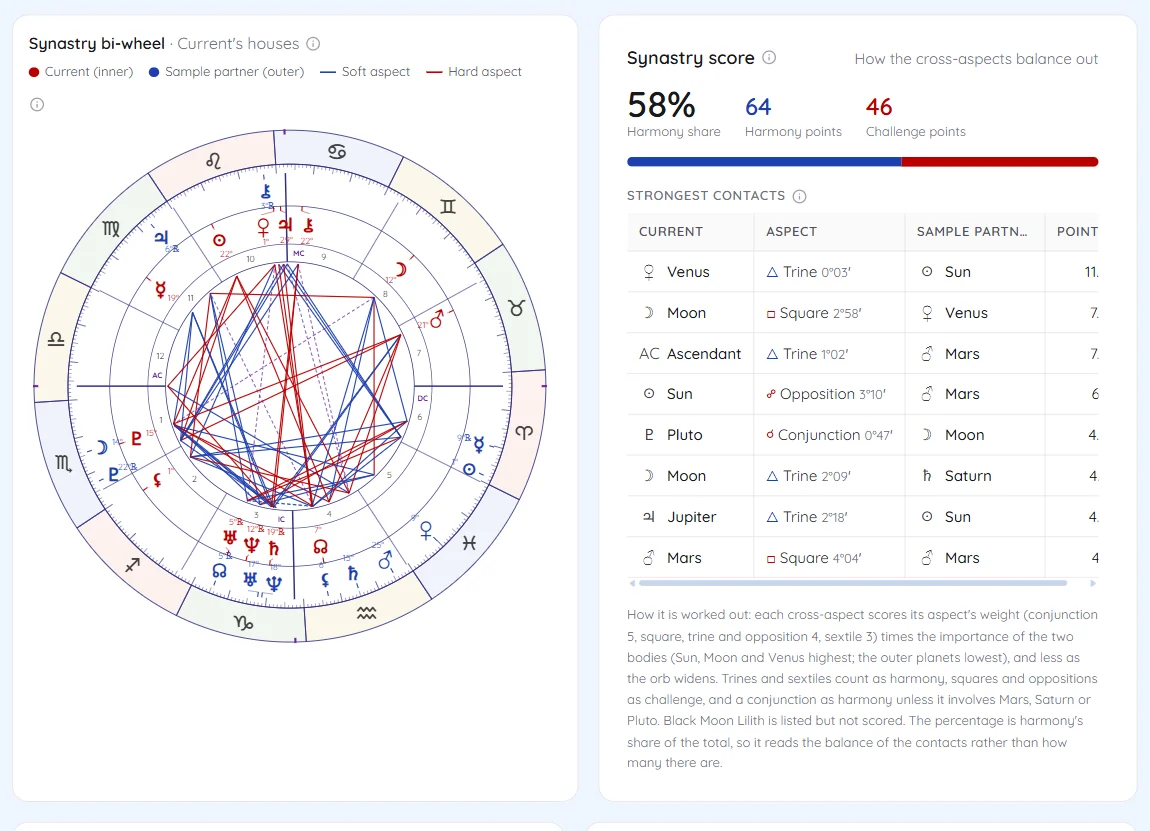
The Synastry tab draws the first person's chart on the inner ring, in their own houses, with the second person's planets on the outer ring. The first positions table gives the first person's planets in their own houses, and the second gives the second person's planets in the first person's houses.
The cross-aspect grid and the Cross-aspects list give every contact between the two charts, tightest first, including the second person's planets to the first person's Ascendant and Midheaven.
- 3
Check the synastry score
The score weighs each cross-aspect by its aspect, the importance of the two bodies and how tight it is. Trines and sextiles count as harmony, squares and oppositions as challenge, and a conjunction as harmony unless Mars, Saturn or Pluto is involved. Quincunxes and semi-sextiles are listed but score nothing.
Harmony share is harmony's part of all the points, so it reads the balance of the contacts rather than how many there are. Strongest contacts lists the eight that score most.
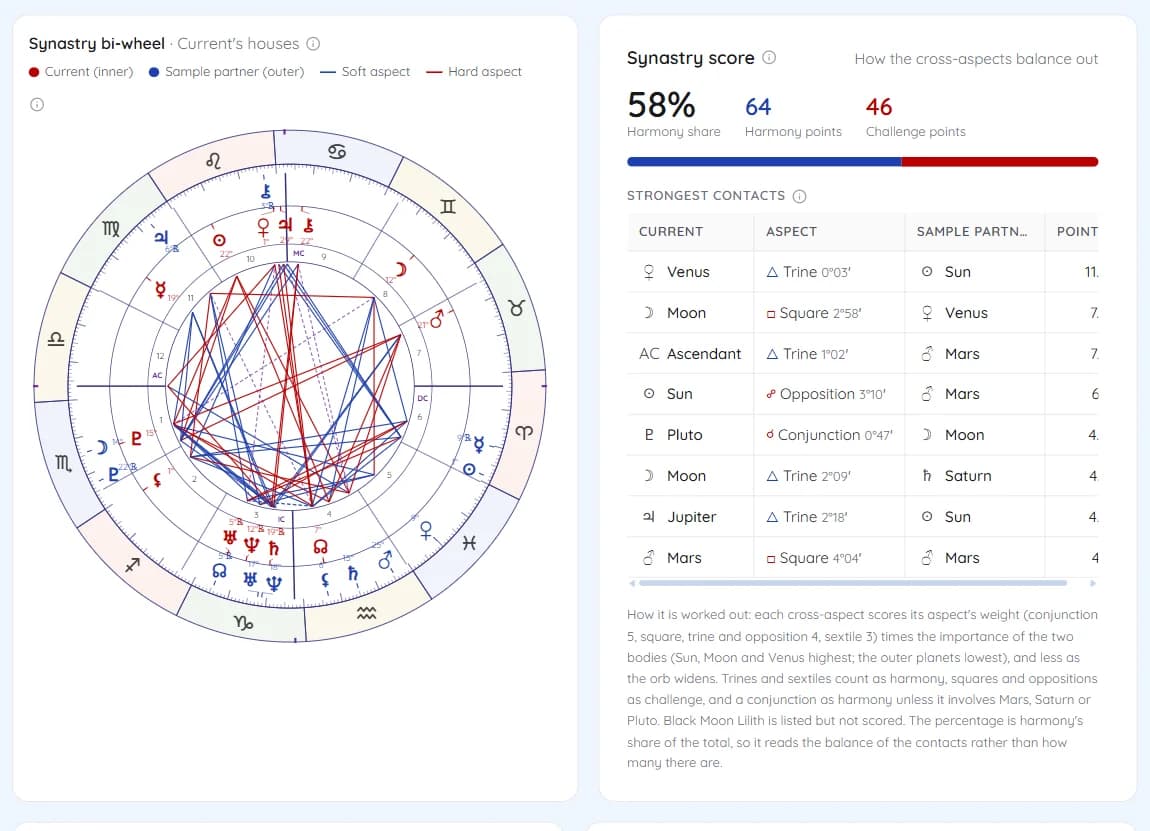
The synastry bi-wheel and the synastry score with the strongest contacts - 4
Cast the composite
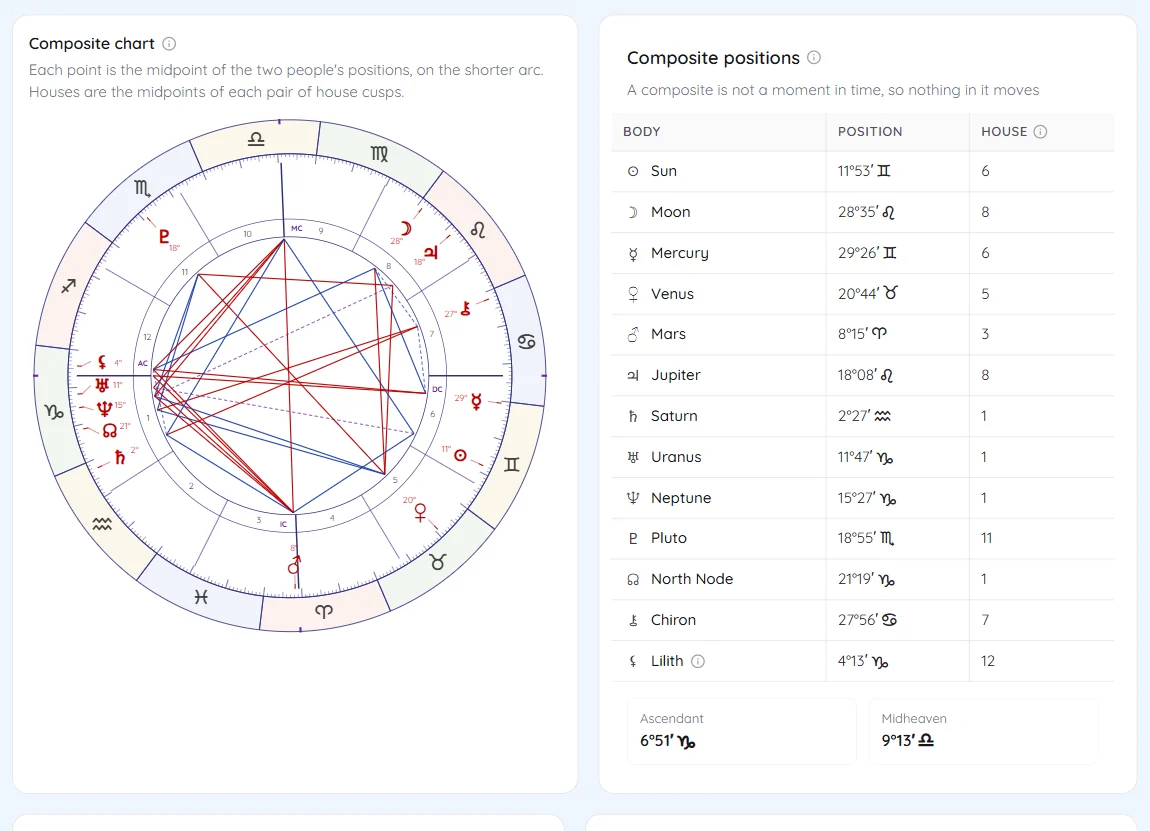
The Composite tab builds one chart from the midpoints of the two people's positions, on the shorter arc, with house cusps at the midpoints of each pair of cusps. It is not a moment in time, so nothing in it moves.
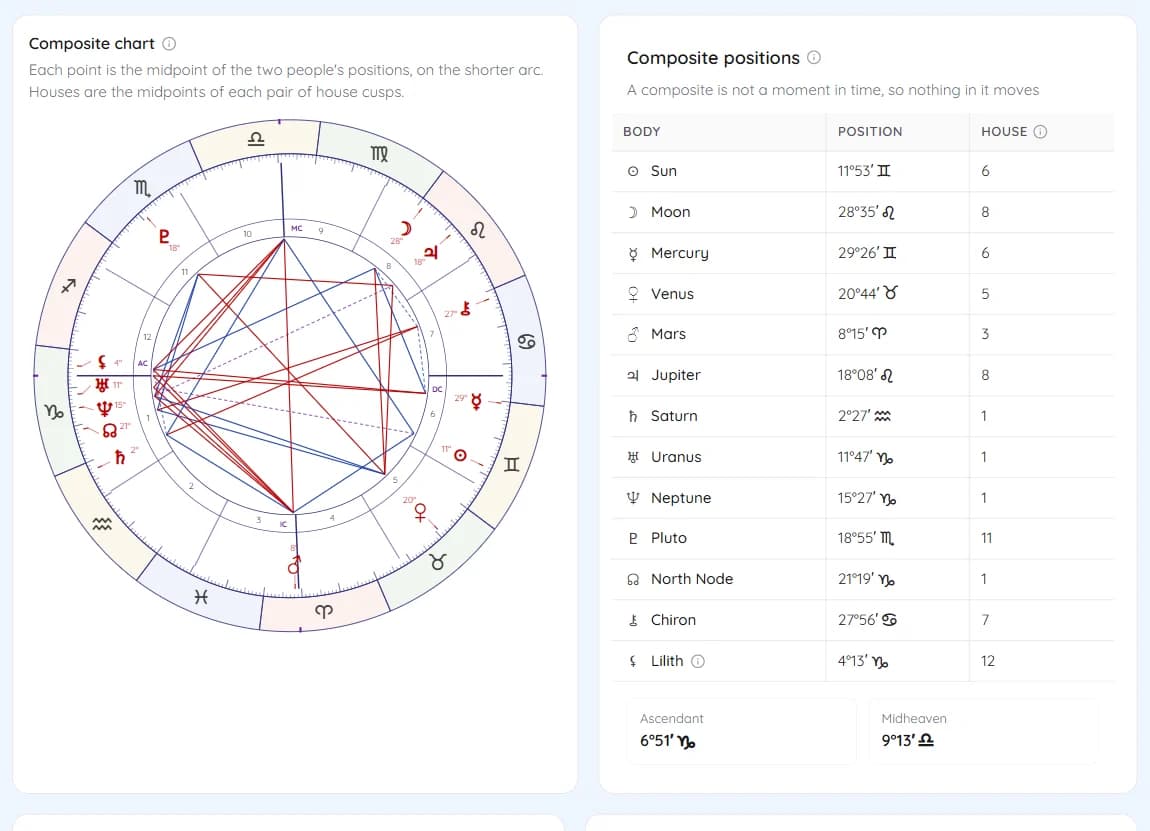
The composite chart and its positions - 5
Cast the Davison chart
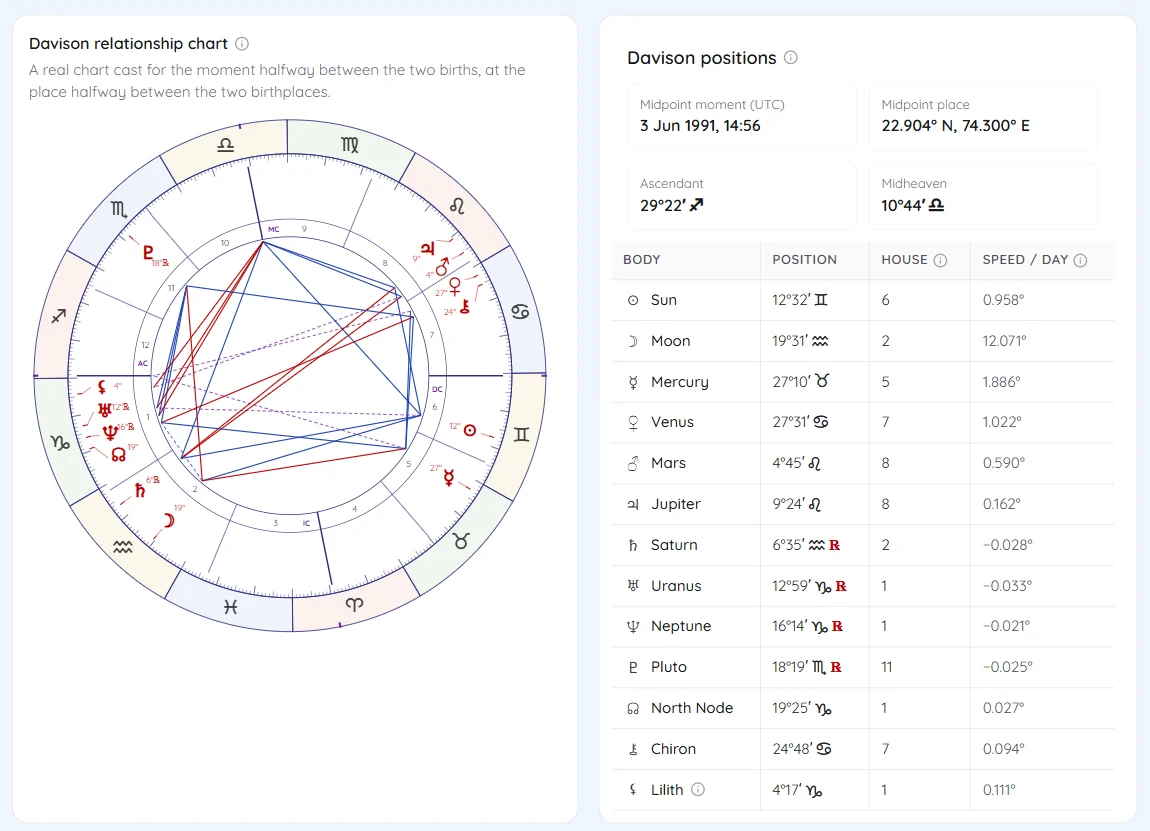
The Davison tab casts a real chart for the moment halfway between the two births, at the place halfway between the two birthplaces. The midpoint moment (in UTC), the midpoint place and the angles are shown above its positions.
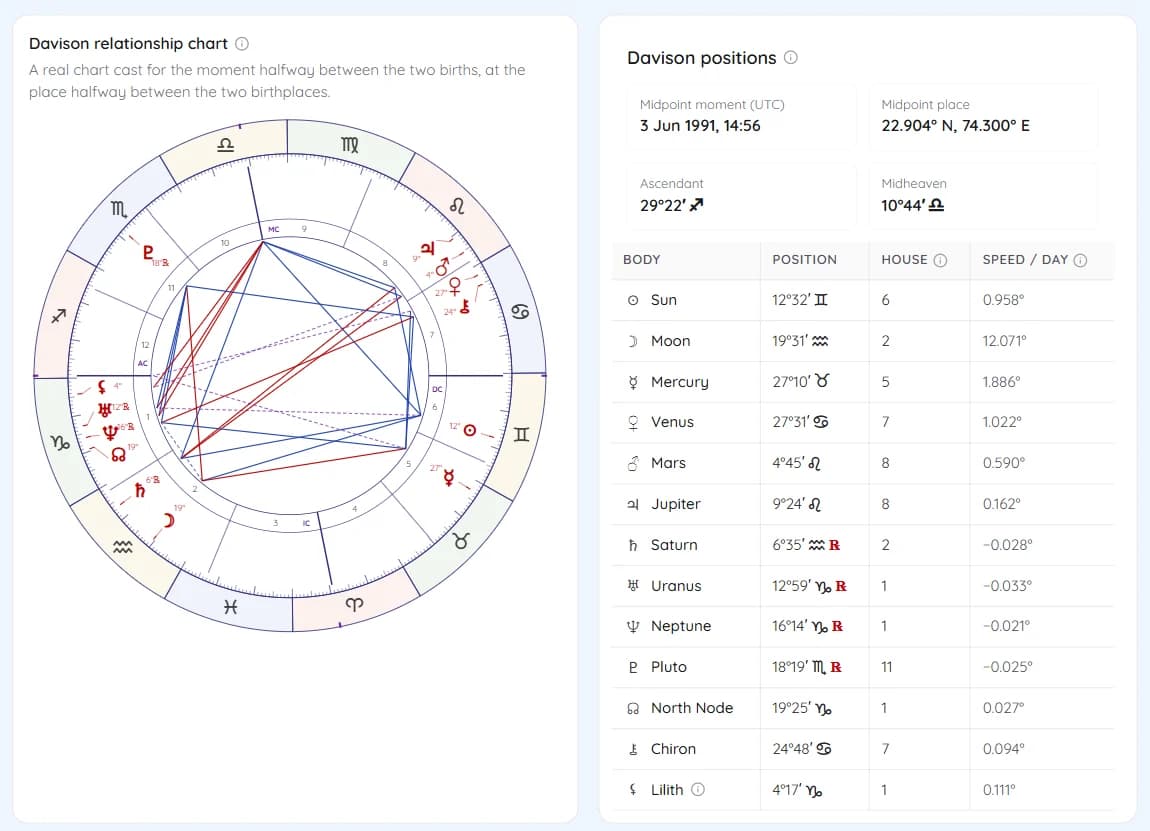
The Davison relationship chart with its midpoint moment and place
Try it on your own chart
7 days free on any plan. Cancel before the trial ends and you pay nothing.